

Every slim cart listing leads with the same number — how narrow it is — and that number is only half the story. A cart can slide into your fridge gap sideways and still fail: too long for the usable depth, so it sticks out into the walkway; or parked right where the fridge door needs to swing, so the door never opens fully. The fix is three measurements taken before you buy: gap width at the baseboard, usable depth to the back wall, and door-swing clearance. If you remember one thing: the depth decides, not the width.
As an Amazon Associate, HomeXWander earns from qualifying purchases made through links on this page — at no extra cost to you.
Can the fridge gap really hold a rolling cart?
Yes — it is one of the most reliable dead spaces in a rental kitchen. Full-size fridges cluster at 30, 33, and 36 inches wide (Maytag puts the range at 24 to 40 wide, 29 to 36 deep with handles), and the leftover sliver between fridge and counter or wall commonly runs 5 to 10 inches wide. Truly slim carts exist at 5 to 7 inches on their narrow side for exactly this gap, while standard 3-tier utility carts run roughly 17 by 13 inches — far too wide. The gap’s depth is the quiet constraint: one renter-focused guide puts most fridge gaps at 20 to 24 inches deep front to back, but your usable depth is whatever your tape says from the front edge to the back wall, minus the baseboard.
Measure first: the numbers that decide everything
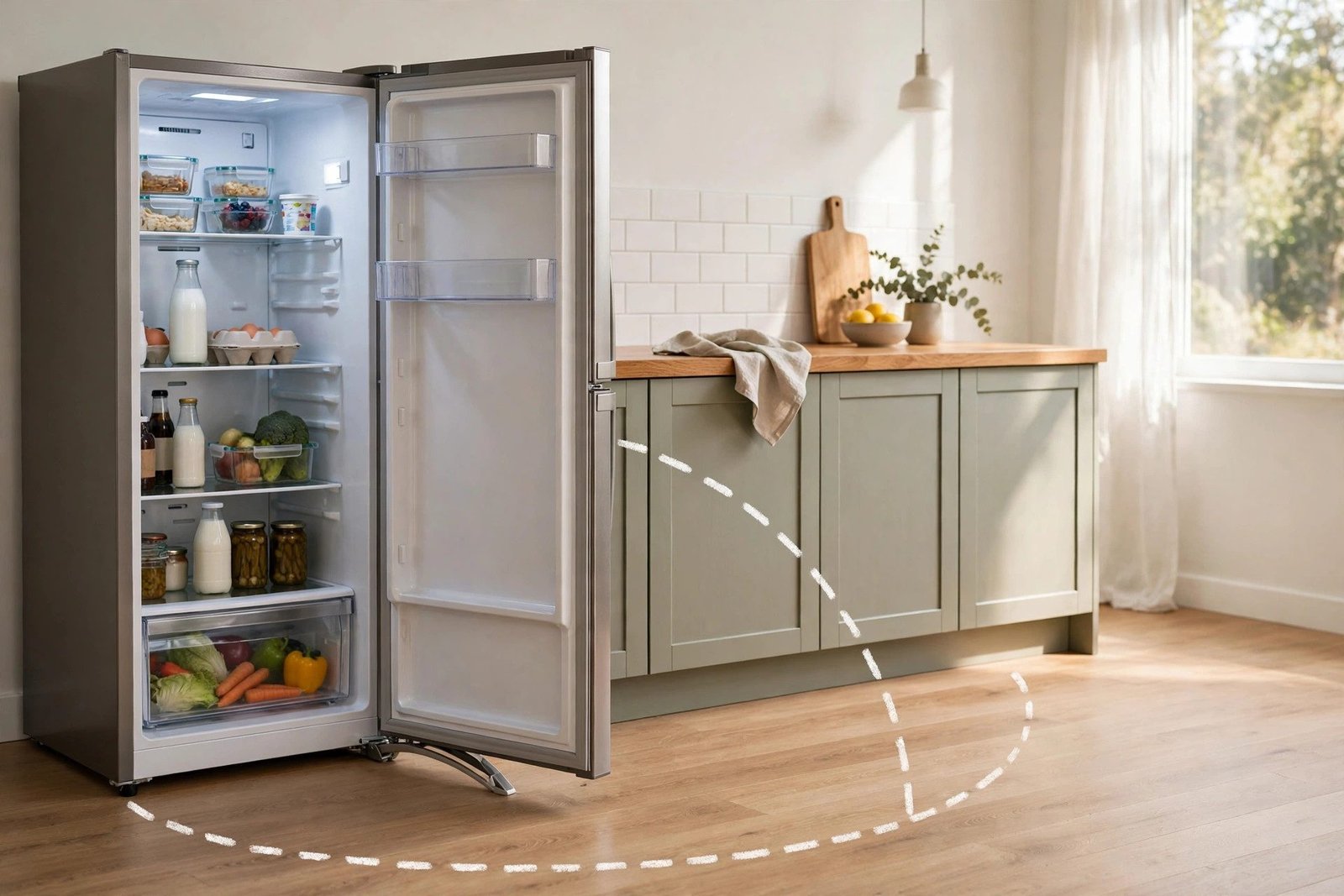
Write down five numbers before you buy anything. One: gap width at the baseboard — measure at floor level and at counter height and keep the smaller number; baseboards and trim steal about half an inch near the floor. Two: usable depth — from the front edge of the fridge or counter to the back wall; this is the interior-depth trap, because a cart’s long side must fit this number, not the fridge’s catalogue depth. Three: door-swing clearance — Maytag advises allowing 2½ inches beside a wall for a fridge door to swing unobstructed, and Whirlpool’s dimension sheets ask for 2 to 3.74 inches beside a wall; anything parked in that arc blocks the door. Four: roll-out floor — a gap cart rolls out its full length, so you need clear floor in front roughly equal to the cart’s long side. Five: height — standard counters sit at 36 inches; every cart below is shorter than that, so height is rarely the constraint beside a fridge. Door swing is.
One more allowance: makers label width and depth differently, and the same cart can be listed two ways. Where sources disagree below, we say so — compare the cart’s narrow side to your gap width and its long side to your usable depth, whatever the listing calls them.
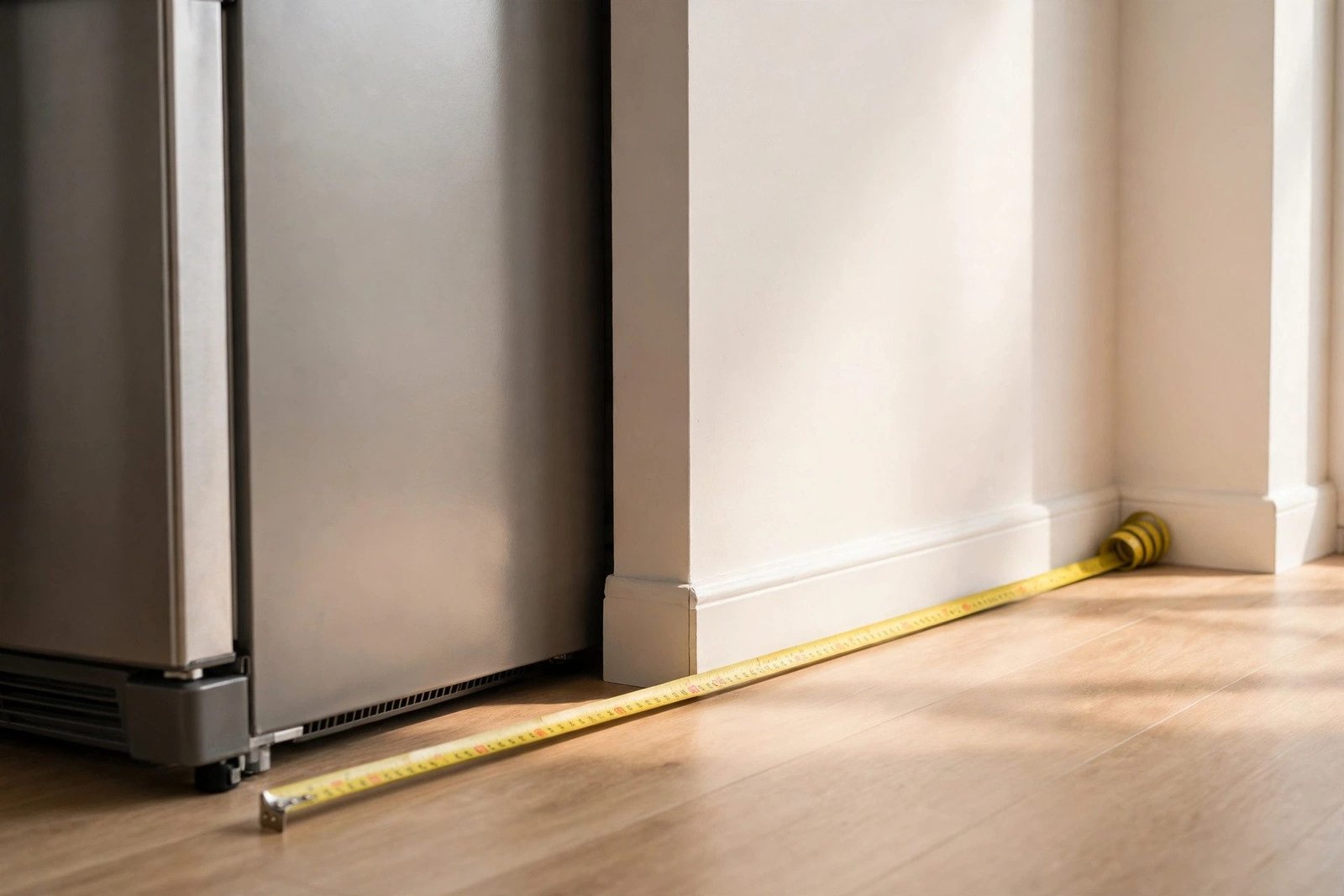
Six slim carts, sized to six fridge gaps
SPACEKEEPER Slim Rolling Storage Cart, 3 Tier — best for the narrowest gaps
This is the narrowest slot in the lineup: a plastic 3-tier cart whose narrow side is just 4.9 inches, with a 15.3-inch long side and 26.1 inches of height, on lockable 360° casters with removable shelves. The maker markets it for exactly your case — the gap between fridge and counter. At 15.3 inches long it is also the shortest cart here, so it fits shallow gaps the longer carts cannot.
The drawbacks are weight evidence and dimensions. The listing’s own Q&A says 20 pounds per shelf, while its product-information fields say 40 to 44 pounds maximum — those cannot both be right, so load it like the smaller figure until you confirm live. One measurement line also reads slightly different dimensions (5.1 by 15.75 by 24 inches). Plastic shelves suit light pantry goods, not a case of cans.
Yamazaki Home Tower Rolling Slim Storage Cart (32″ H) — best steel cart for a 5½-inch-plus gap
If your gap measures 5½ to 6 inches at the baseboard, this is the furniture-grade option: a steel 3-tier cart with a wood top board, 5.12 inches wide, 18.7 inches long, and 31.7 inches tall. Yamazaki’s own guidance says a gap of about 5.5 to 6 inches lets it roll in and out easily. Per-shelf limits are published and modest — 13.2 pounds on the bottom shelf, less above, 26.6 pounds total — so it is a spices-and-jars cart, not a drinks cart.
The drawbacks are length and wobble. At 18.7 inches long (one spec table says 17.63 — sources differ) it needs the deepest usable depth here, plus roughly 19 inches of clear floor to roll fully out. Tall, slim, and freestanding means a slight wobble when pulled from a confined space, per the manual.
VASAGLE Slim Rolling Cart, 4-Tier (5.1 inches deep) — best four tiers in a 5-inch gap
For maximum tiers in the same 5-inch class, this steel-frame cart runs 5.1 inches on its narrow side, 17.9 inches long, and 30.3 inches tall, with three wire baskets under a particleboard top. Shelf spacing is 9.1 inches — enough for oil bottles — and the maker sizes it explicitly for the counter-to-refrigerator gap.
The drawbacks are load and material. The overall maximum static load is 22 pounds total — the lowest ceiling here — and the manual warns against humid environments because of the particleboard top: wipe spills immediately. Beside a fridge that sweats in summer, that matters.
Check latest price on Amazon
Frylr Slim Storage Cart, 6″ Wide — best wooden cart for a 6-inch-plus gap
If your gap gives you a full 6 inches, this engineered-wood cart trades plastic for a cabinet look: 6 inches on the narrow side, 15.8 inches long, 33.5 inches tall, with a listed maximum weight recommendation of 50 pounds. The shorter 15.8-inch length suits shallower gaps, and the taller frame uses vertical space the 3-tier carts leave empty.
The drawbacks are availability and evidence. One retailer listing currently shows this cart out of stock — confirm a live offer before you plan around it. The 50-pound figure is a listing claim we could not corroborate, and we found no sourced star rating, so none is quoted.
Check latest price on Amazon
VASAGLE Slim Rolling Cart, 4-Tier (8.7 inches deep) — best load capacity for wider gaps
Same footprint family, wider slot: this version runs 8.7 inches on its narrow side, 17.9 inches long, and 30.3 inches tall — and doubles the load ceiling to 44 pounds total. If your gap measures 9 inches or more at the baseboard, this is the first cart here that can honestly carry canned goods across all four tiers.
The drawbacks are the same particleboard caution as its 5.1-inch sibling — keep it dry — and fit honesty: at 8.7 inches it simply will not enter a 6-inch gap, whatever the photos suggest. Measure the baseboard, not the brochure.
Check latest price on Amazon
SONGMICS 3-Tier Narrow Rolling Cart — best low cart for a 9-inch gap
The low option: a stainless-tube frame with three baskets, 8.7 inches on its narrow side, 15.7 inches long, and only 23.6 inches tall, with two lockable wheels and six removable hooks. Maker specs put it at 11 pounds per shelf, 33 pounds total. Its short length suits shallow gaps, and its low height keeps it below the fridge door’s handle zone in many layouts.
The drawbacks are capacity and height. Eleven pounds a shelf is spice jars and snack packs, not a drinks stash, and at 23.6 inches tall it gives up the vertical space taller carts use. Tier spacing is not published — measure your tallest bottle first.
Check latest price on Amazon
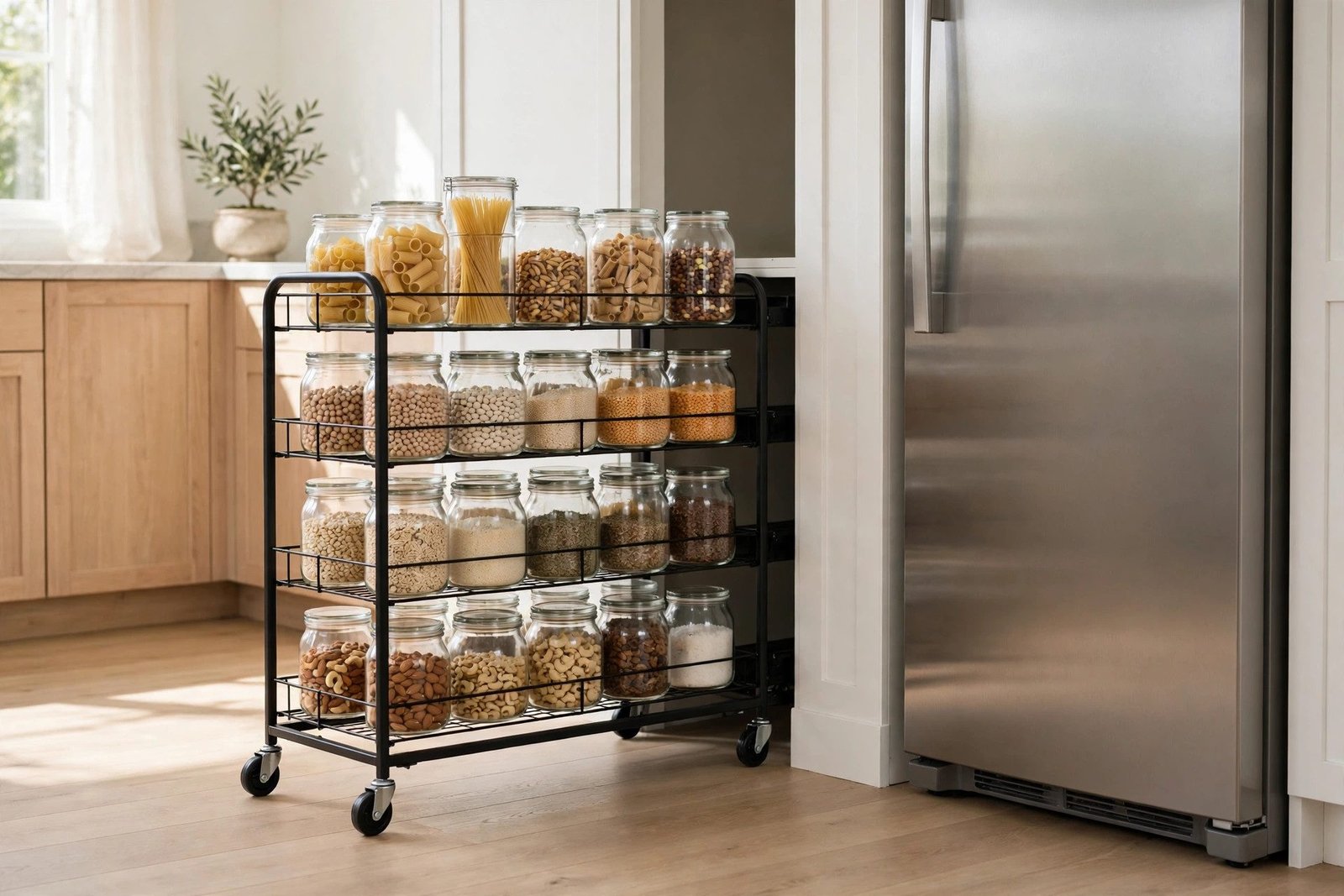
How we chose these: we do not buy and bench-test every product, and never claim we did. We shortlist on published dimensions and fit, state drawbacks, and re-check prices before publishing.
Fridge-gap fit table: what fits where
Read your measured gap down the left column. Every cart still needs its own checks — usable depth, roll-out floor, door swing.
Swipe sideways to see all columns →
| Your measured gap | What fits | Also check |
|---|---|---|
| Width ~5 in at baseboard, depth 16 in+ | SPACEKEEPER 3-tier (4.9 in narrow side, 15.3 in long) | Weight figures conflict — load light until confirmed |
| Width 5½–6 in, depth 19 in+ | Yamazaki Tower Slim (5.12 in wide, 18.7 in long) | ~19 in clear floor to roll out; 26.6 lb total |
| Width ~5½ in, depth 18 in+ | VASAGLE 4-tier 5.1 in (17.9 in long) | 22 lb total; keep particleboard dry |
| Width 6½ in+, depth 16 in+ | Frylr 6-in cart (15.8 in long) | Confirm live stock first — out-of-stock read found |
| Width 9 in+, depth 18 in+ | VASAGLE 4-tier 8.7 in (17.9 in long) | 44 lb total; same particleboard caution |
| Width 9 in+, depth 16 in+, low profile | SONGMICS narrow 3-tier (15.7 in long, 23.6 in tall) | 11 lb per shelf; tier spacing not published |
| Cart would sit in the door swing arc | No cart — move it to the non-hinge side or skip | Maytag 2½-in / Whirlpool 2–3.74-in clearance figures |
Two rules sit under the table. Gap figures are your measurements, not standards — fridge widths cluster at 30/33/36 inches, but the sliver beside yours is whatever your tape says at the baseboard. And if a cart’s narrow side lands within half an inch of your gap width, choose the narrower cart — wheels, handles, and baseboards eat the margin.
What to skip: wide utility carts and door blockers
The owned-home catalog assumes space you may not have: standard 3-tier utility carts around 17 by 13 inches (they fit beside a fridge only if your “gap” is actually a parking space), screw-in pull-out pantry racks fixed to cabinet sides you do not own, and tall cabinets that need anchoring. Also skip the marketing: any cart claiming to fit “any gap” without publishing both its narrow side and its long side, and any cart — however slim — that would stand in the fridge door’s swing arc. A door that cannot open past 90 degrees is a daily tax, not storage.
If a listing gives only one dimension, it is hiding the one that will burn you.
Your five-minute measurement checklist
Write down five numbers. One: gap width at the baseboard — floor level and counter height, keep the smaller. Two: usable depth — front edge to back wall. Three: door-swing clearance — open the fridge door fully and mark where its arc passes. Four: roll-out floor — clear space in front of the gap. Five: height — floor to the lowest obstruction. Then read the fit table: width picks the cart family, depth and swing confirm the piece. A cart that blocks the fridge door does not belong in your kitchen.
Frequently asked questions
What size slim cart fits beside a fridge?
Measure the gap at the baseboard first. Truly slim carts run 5 to 7 inches on their narrow side; the narrowest here is 4.9 inches. Leave about half an inch to an inch of play — a 6-inch gap wants a cart listed at 5.5 inches or less.
Why does my slim cart stick out of the fridge gap?
Usually the interior-depth trap: the cart’s long side is longer than your usable depth from front edge to back wall. Fridge gaps often run 20 to 24 inches deep, but baseboards and the fridge’s own depth shrink the usable figure — measure yours.
Will a cart beside the fridge block the door?
It can. Maytag advises 2½ inches of clearance beside a wall for unobstructed door swing, and Whirlpool sheets ask for 2 to 3.74 inches. If the cart stands in the door’s arc, the door cannot open fully — test the swing before you buy.
How much weight can a fridge-gap cart hold?
Less than you hope. Published ceilings here run from 22 pounds total (VASAGLE 5.1-inch) to 44 pounds (its 8.7-inch sibling), with per-shelf limits as low as 2.2 pounds on a top board. Load heavy items low, and treat conflicting figures cautiously.
Can a slim cart work beside a washer or stove instead?
Yes — the same measurements apply: width at the narrowest point, usable depth, and door or lid swing. Beside a stove, keep oils below counter height and away from heat; beside a washer, mind humidity if the cart has particleboard.
What slim carts should renters avoid?
Anything screwed into a cabinet side, any standard utility cart wider than your gap, and any cart that blocks a door swing. If it needs a drill, hides its long-side dimension, or stops the fridge door opening, skip it.
Keep reading
- Best Narrow Pantry Cabinet for a Small Kitchen (when the gap deserves a cabinet, not a cart)
- Galley Kitchen Organization: 5 Zones That Work Without Drilling
- How to Organize a Small Kitchen Without Drilling (every zone, zero screws)
[…] Best Slim Rolling Cart for the Fridge Gap (Width AND Depth) — when the useful space is beside the fridge, not inside it. […]