

A narrow pantry cabinet is the one furniture buy where the product photo tells you almost nothing. Two cabinets can look identical — tall, white, two doors — and one fits while the other does not, because the deciding number is width: the gap between your fridge and the wall, the swing of the cabinet’s own doors, and the height to your ceiling. Get those wrong and no shelf layout saves you. This guide works width-first: measure the gap, the swing, and the ceiling, then compare shelves and anti-tip hardware — in that order.
As an Amazon Associate, HomeXWander earns from qualifying purchases made through links on this page — at no extra cost to you.
Gap cabinet or wall cabinet: which width do you actually have?
If your spot is the strip between the fridge and a wall, you need a true gap cabinet — roughly 16 inches wide or less, deep enough for cans two rows deep, tall enough to use the vertical space. In our research, exactly one candidate fits that description; it is the first pick below.
If your spot is an open stretch of wall, you have more width than you think — 30 inches or so — and the two VASAGLE cabinets below become honest options. They are good wall-run cabinets. They are not gap cabinets: at about 30 to 31½ inches wide, neither will slide into a fridge gap.
Both spots start with the same four measurements.
Measure first: the four numbers that decide everything
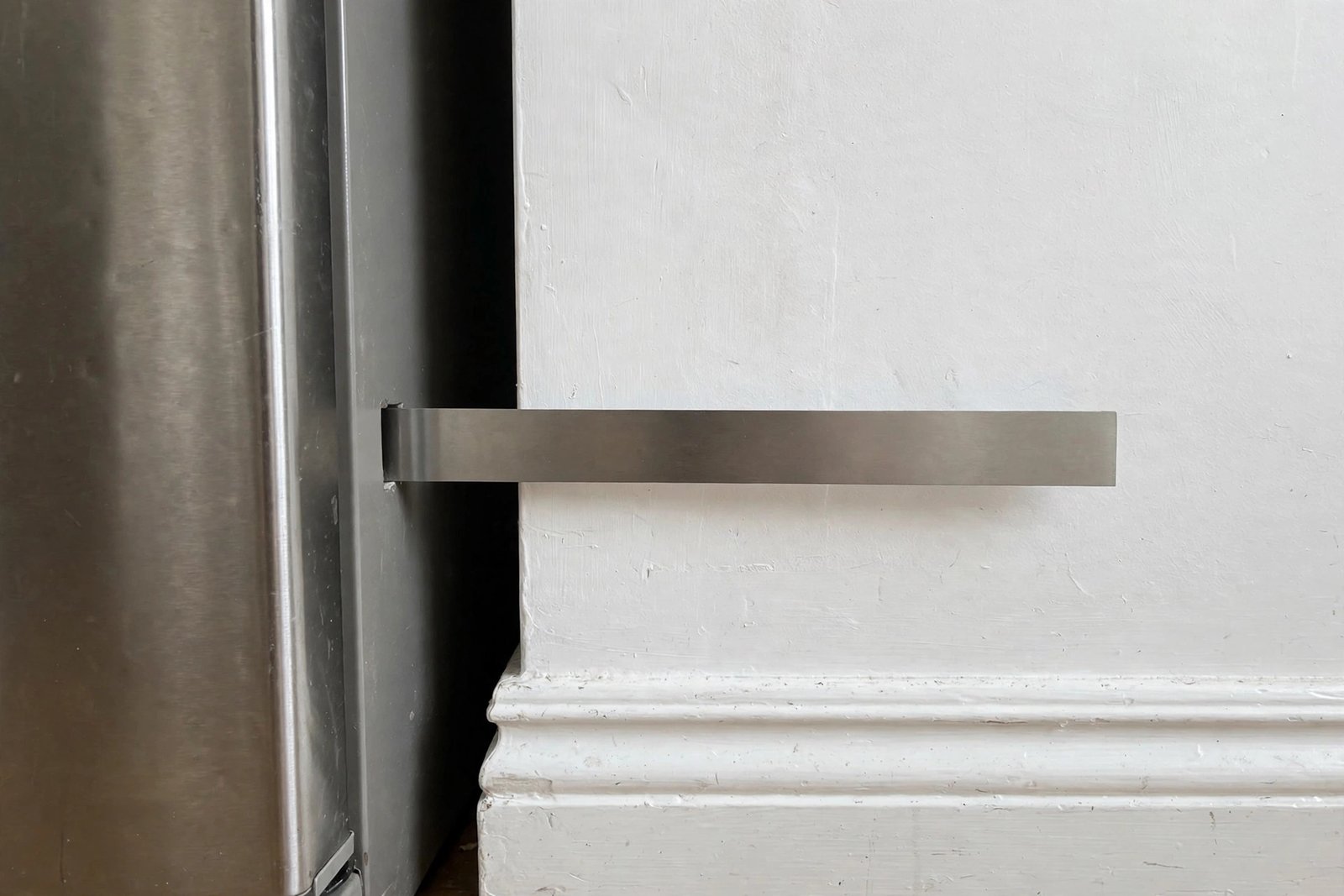
Number one: gap width, measured twice. Measure fridge side to wall at floor level and again at counter height; use the smaller number — walls and fridges are rarely parallel. Include the baseboard, which protrudes exactly where a cabinet’s feet stand, and note any outlet or valve in the gap.
Number two: fridge door swing. Open the fridge door fully and watch the handle’s arc. A cabinet in the gap must not sit in it, and the door still needs to open far enough to pull out crisper drawers. One 2026 narrow-pantry guide puts it plainly: measure the gap including the fridge’s door swing, because a five-inch cart needs a little more than five inches of room. The same logic scales up to a 16-inch cabinet.
Number three: cabinet door swing. A hinged door needs clear space in front to open — one small-kitchen furniture guide suggests roughly 18 to 24 inches to open 90 degrees, while sliding or barn-style doors need none. In a galley kitchen that swing space is your walkway. If you cannot stand in front of the cabinet with its doors open, it is too deep for the spot, whatever its width.
Number four: ceiling height. These cabinets stand about 70 to 72 inches tall. Measure floor to ceiling at the spot itself — soffits and beams live at walls. Leave breathing room on top: you must also tilt the cabinet upright during assembly, and one that exactly equals the ceiling height cannot be stood up in the gap.
Adjustable shelves and door shelves: what they actually buy you
Adjustable shelves matter more in a narrow cabinet than a wide one. A 16-inch-wide cabinet has no spare width, so its usefulness is all vertical: six shelves set to your food’s heights — tall boxes and oil bottles low, short cans and spice jars high. Fixed shelves waste the top third on dead air above short items. Count adjustable shelves in listings, not total shelves, and check whether pin positions are stated. Where a listing does not state it, this guide leaves the cell blank rather than guessing.
Door shelves are the second half of the storage. The cabinets in our research carry six door-mounted shelves or racks for spice jars and small items. The trade-off is weight: VASAGLE door shelves are rated around 10 to 11 pounds each in their listings — spices and packets, not full oil bottles. Load heavy items low and central; a tall narrow cabinet loaded top-heavy is the one that wants to tip (see anti-tip below).

The picks, by width
How we chose these: we do not buy and assemble every cabinet, and never claim we did. We shortlist on published dimensions and fit, cross-check against listing and manual sources, and flag every figure we could not confirm.
Best for the fridge gap: IRONCK Narrow Pantry Cabinet (HK-PT-02A family)
This is the only true gap cabinet in our research: a 15.8-inch-square footprint — about 15.8 inches wide × 15.8 inches deep × 72 inches high per the listing — that trades width for height. The family manual describes six storage areas in the main cabinet plus six on the door rack, twelve compartments in all, adjustable shelves on pins, door-bottom pulleys or wheels, and an included anti-tip device. Two 2026 apartment-pantry guides describe the same slim model: 15.8-inch width, six adjustable shelves plus door storage, about 86 pounds.
The drawbacks are real. At 72 inches tall and under 16 inches wide, it is top-heavy by design — the manual’s anti-tip step (strap to a wall stud) is not optional; see the renter section below. At roughly 86 pounds, it is a two-person move despite the wheels. And our research confirms the 02A listing’s dimensions but not a usable price: pack figures were not reproduced and the only other read is undated, so we print no price. Confirm the exact variant (02A vs the sibling 02B in manuals) and live price before ordering.
Price not quoted — no usable dated read in our research (re-check live listing at publish)
Best wall-run cabinet (not a gap cabinet): VASAGLE Pantry Cabinet UBBC561B12, Ink Black
Choose this when your spot is an open wall about 30 inches wide: a 71.7-inch-tall cabinet, 15.7 inches deep × 30 inches wide per the listing, with two cabinets, a middle drawer, four adjustable shelves, and six door shelves. Listing load figures: adjustable shelf 60 pounds, door shelf 10 pounds, drawer 25 pounds. Product weight is listed at 111 pounds — plan assembly help. The listing’s own note says to attach it to the wall with the included anti-tip kit.
Be clear-eyed: at 30 inches wide this will not fit a fridge gap, and at 111 pounds it is furniture, not a movable organizer. Our research found no usable dated price (listing crawls showed no featured offers), so we print none.
Price not quoted — no usable dated read in our research (re-check live listing at publish)
Wider wall-run alternative: VASAGLE LIRY Pantry Cabinet UBBK364W01, Rustic White
The same idea, slightly wider and a touch shorter: 15.8 inches deep × 31.5 inches wide × 70.3 inches high per the listing, with barn-style doors, a drawer, a pull-out tray, adjustable shelves, and six door shelves. Listing figures: 111.6 pounds; adjustable shelf and tray 50 pounds each; door shelf 11 pounds; drawer 30 pounds. Barn-style doors slide rather than swing, which helps in a tight galley — this model’s one width-adjacent advantage over its sibling.
Same honest limits: 31.5 inches wide is a wall cabinet, not a gap cabinet, the weight demands help, and our research has no usable dated price (pack figures traced to different models, so we quote none).
Price not quoted — no usable dated read in our research (re-check live listing at publish)
Mentioned, not linked: VASAGLE Slim Rolling Cart (about 5 inches wide)
If your gap is closer to 5 or 6 inches than 16, no cabinet fits — a slim rolling cart is the honest build: slide out, grab, slide back, heavy cans on the bottom tier. Our research found a 4-tier candidate about 5.1 inches wide, but the exact model is ambiguous across listings, so we are not linking it until model, color, and listing are pinned. Measure including the fridge door swing before buying any cart.
The anti-tip question renters must answer first
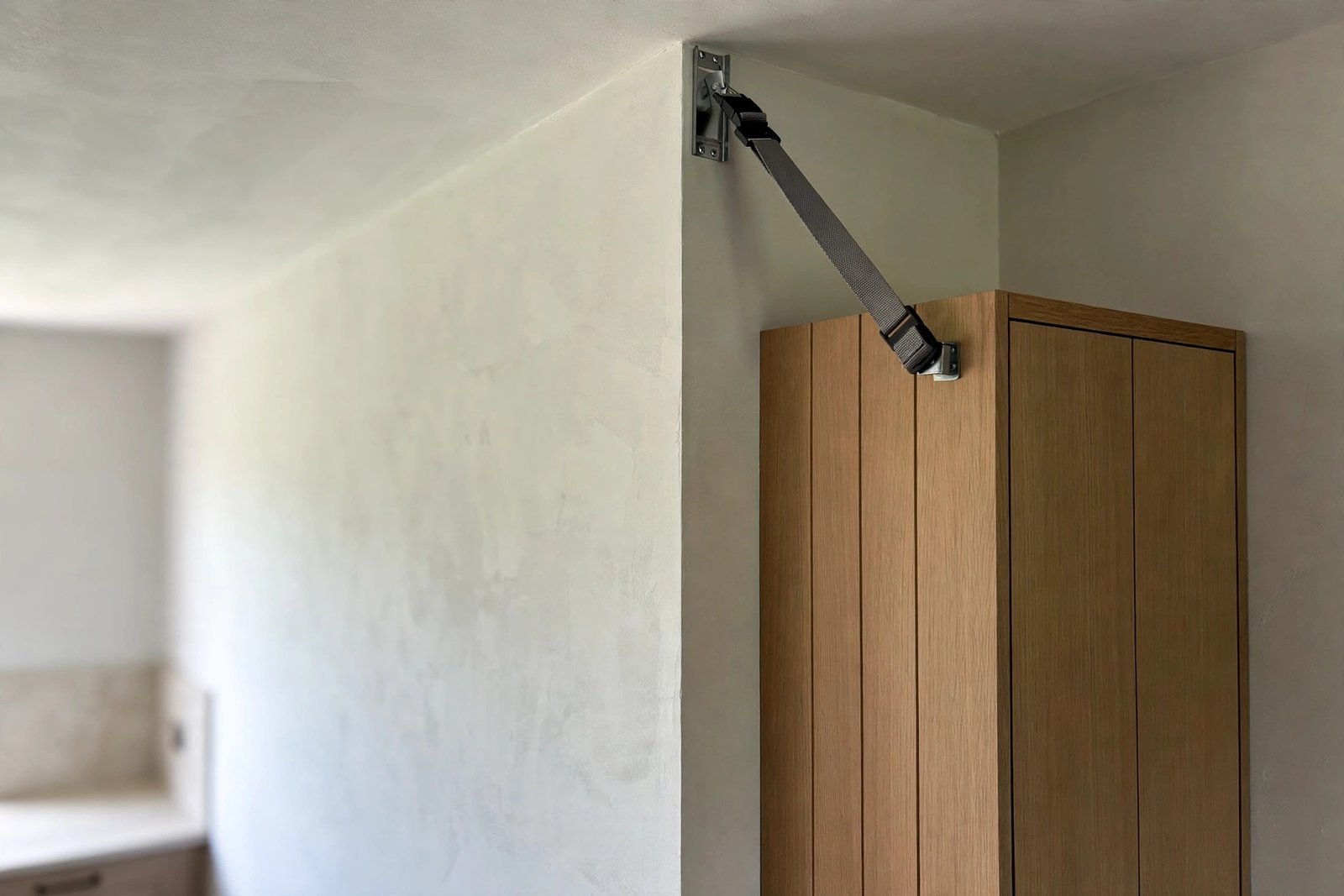
Every tall cabinet here ships with an anti-tip kit, and every manual we read says the same thing: secure the top rear to a wall stud with the provided screws. That is a drilled hole in your landlord’s wall — the one thing this site’s renter-safe promise tries to avoid. So the honest sequence is: ask the landlord first. Many allow one small anchor hole for safety hardware; get the answer in writing if you can.
If the answer is no, do not simply skip the strap on a 72-inch, 16-inch-wide cabinet. Renter-safe alternatives: choose a shorter or wider unit stable without anchoring, keep heaviest items on the lowest shelves, use the adjustable feet to level it, and keep it out of climbing reach. If none of that works, a tall narrow cabinet is the wrong buy for that rental — a rolling cart or low cabinet serves you better.
Fit table: read it against your four numbers
Swipe sideways to see all columns →
| Product | Width class | Listing size (W × D × H) | Adjustable shelves | Door shelves | Price read (dated) |
|---|---|---|---|---|---|
| IRONCK HK-PT-02A family | Gap cabinet | 15.8″ × 15.8″ × 72″ | Yes (pins; positions not stated) | 6 door racks | Not quoted — no usable dated read |
| VASAGLE UBBC561B12 | Wall-run | 30″ × 15.7″ × 71.7″ | 4 (60 lb each) | 6 (10 lb each) | Not quoted — no usable dated read |
| VASAGLE UBBK364W01 | Wall-run | 31.5″ × 15.8″ × 70.3″ | Yes (50 lb each; count not stated) | 6 (11 lb each) | Not quoted — no usable dated read |
| VASAGLE Slim Cart | Fridge-gap cart | ~5.1″ wide (model unpinned) | 4 tiers | — | Check latest price |
Every figure is a listing or manual figure, with blanks where the source states none. None of these products is verified to our standard yet, and no cabinet price is printed — our research holds no usable dated read for any of them. Read the table against your gap width first: if no row fits, the answer is a cart or a different spot, not a wider cabinet squeezed in.
Who should skip a narrow pantry cabinet?
Skip the tall gap cabinet if you cannot anchor it and cannot get landlord permission — without its anti-tip strap it is a safety compromise, not a storage win. Skip any cabinet whose doors you cannot fully open in the spot; a pantry you cannot open is a wall. Skip the 30-inch wall cabinets in a small galley — one 2026 guide suggests staying at 24 inches wide or less in kitchens of about 10×10 feet. Skip furniture entirely if your gap is under about 6 inches — that is rolling-cart territory.
Your five-minute checklist
- Measure the gap twice — floor and counter height, baseboard included; use the smaller number.
- Open the fridge door fully — confirm the handle’s arc clears the spot and drawers still pull out.
- Stand in the spot and mime the swing — cabinet doors need their opening space, and so do you.
- Measure ceiling height at the wall — 70–72 inches of cabinet needs headroom to stand up.
- Settle anti-tip first — landlord permission for one anchor, or pick a lower, wider unit.
- Re-check the live price — this guide prints no cabinet price; no usable dated read exists.
Frequently asked questions
What width is a “narrow” pantry cabinet, really?
For a fridge gap, about 16 inches or less — the IRONCK here is 15.8 inches square. Many cabinets marketed as “narrow” or “slim” are actually 30 inches wide, which is narrow only compared with a full pantry unit. Always read the width figure, not the adjective.
Will a 15.8-inch cabinet fit beside my fridge?
Only if your measured gap — the smaller of your floor-level and counter-height numbers, baseboard included — is wider than 15.8 inches, the fridge door still opens fully, and your ceiling clears 72 inches at that wall. If any one fails, it does not fit.
Do I really need the anti-tip strap in a rental?
Every manual here says secure the top rear to a wall stud, and a 72-inch cabinet under 16 inches wide is top-heavy by design. Ask your landlord about one safety anchor. If anchoring is not allowed, choose a shorter or wider unit, load heavy items low, and level the feet — do not just omit the strap.
Why does this guide print no prices for the cabinets?
Because our research holds no usable dated price for any of them: pack figures were not reproduced on live listings, traced to different models, or came from undated registry pages. Rather than print a number we cannot stand behind, each pick says “price not quoted.” The one dated read — the slim cart’s Target range — is printed with its date and ambiguity flag.
Are adjustable shelves worth it in a narrow cabinet?
Yes — with no spare width, vertical fit is everything. Six shelves set to your items’ heights (tall boxes low, short jars high) hold more than fixed shelves with dead air above short items. Count adjustable shelves in the listing; where pin positions are not stated, this guide leaves the figure blank.
My gap is only about 5 inches. What fits?
No cabinet. A slim rolling cart about 5 inches wide is the honest build — slide out, grab, slide back, heavy cans low. Measure including the fridge door swing, because a five-inch cart needs a little more than five inches. Our cart candidate’s model is not yet pinned, so this guide mentions it without a link.