

Every rental closet wastes the same space: the air between the hems of your shirts and the floor. A rod doubler hangs a second bar in that air and doubles your hanging room in one move — no screws, no landlord conversation. But it only works when the math works. Hang the second bar too high and the top tier crushes your shirts; too low and the bottom tier drags on the floor. The fix is three measurements taken before you buy: rod height, garment length, and load. If you remember one thing: both tiers have to clear — measure yours first.
As an Amazon Associate, HomeXWander earns from qualifying purchases made through links on this page — at no extra cost to you.
Can a hanging doubler really double a rental closet?
Yes — because most rental closets hang one row of short clothes in a space built for long ones. Sourced closet guidance puts the standard single rod at 66 inches above the floor, and a built-in double-hang setup at about 81¾ inches for the top rod and 40½ for the lower — each tier holding clothes roughly 40 inches long. Your rental almost certainly has the single 66-inch rod, not the built-in double. A hook-on doubler borrows the idea: it drops a second bar below your rod, and suddenly shirts, blouses, and folded pants have two homes instead of one. The honest trade-off: a doubler adds a bar, not a closet. Your existing rod now carries both tiers, and the top tier only gets the drop distance — stated per product below.
Measure first: the numbers that decide everything
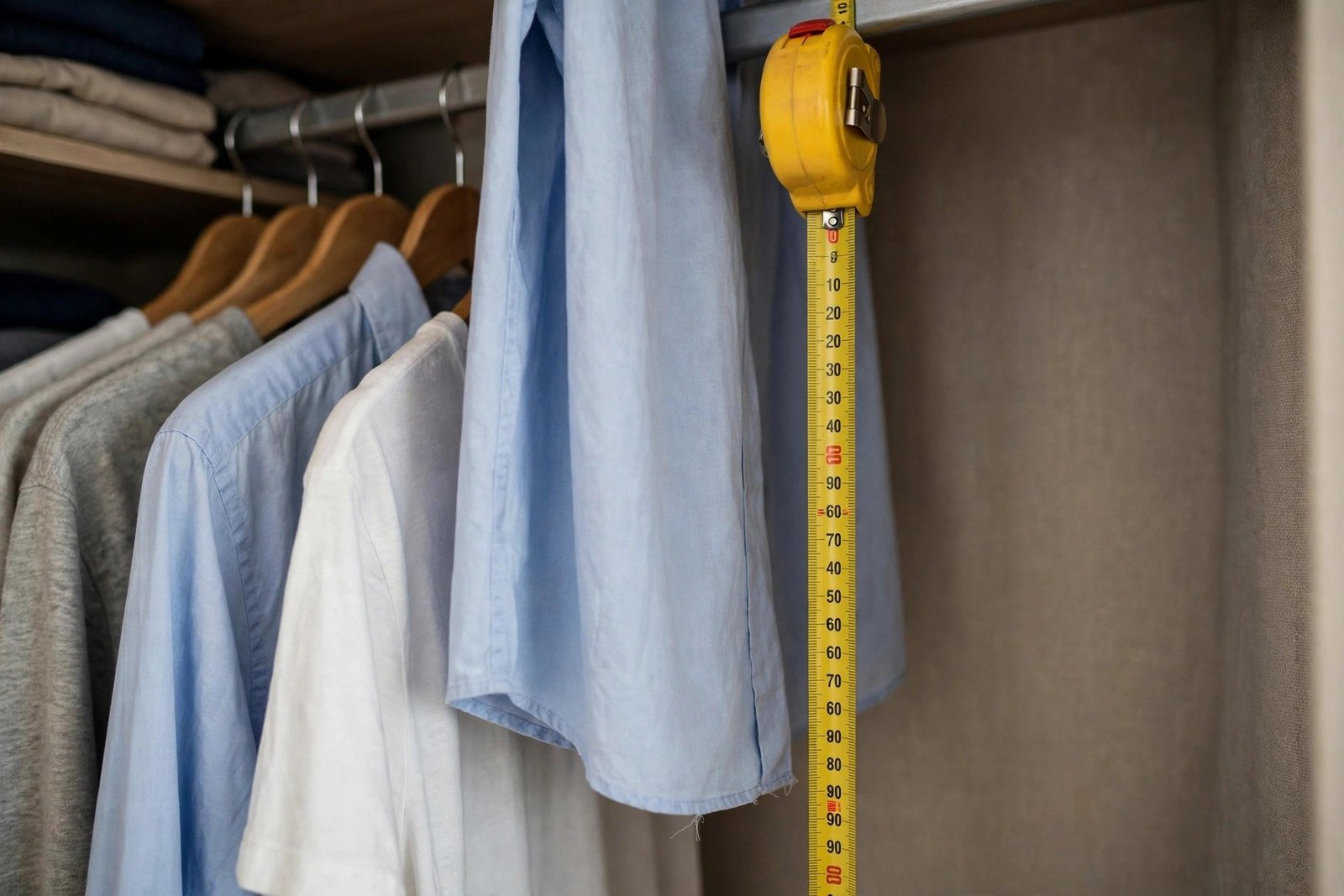
Write down five numbers before you buy anything. One: rod height — floor to the underside of your existing rod; sourced standard is 66 inches, but measure yours, because older rentals vary. Two: longest garment in the section — measure your longest shirt or blouse on its hanger, hook to hem; planning guidance puts shirts at roughly 40 inches, but yours is the number that counts. Three: the drop you can spare — rod height minus garment length minus a couple of inches of floor clearance; that is the space your second bar and its clothes must share. Four: section width — the stretch of rod you actually want to double; doublers come in fixed and adjustable widths, and a 30-inch fixed bar in a 48-inch section leaves a gap. Five: load — count the garments per tier; planning figures put shirts at roughly 2 to 3 pounds each and coats at 5 to 10, so ten shirts is 20 to 30 pounds before hangers.
One more allowance: published and measured dimensions are not always the same number. Where sources disagree below, we say so — measure with a small margin, not to the last eighth of an inch.
Six doublers, sized to six closets
Hook doubler: Simple Houseware Adjustable Closet Hanging Rod — best simple second bar for a standard rod
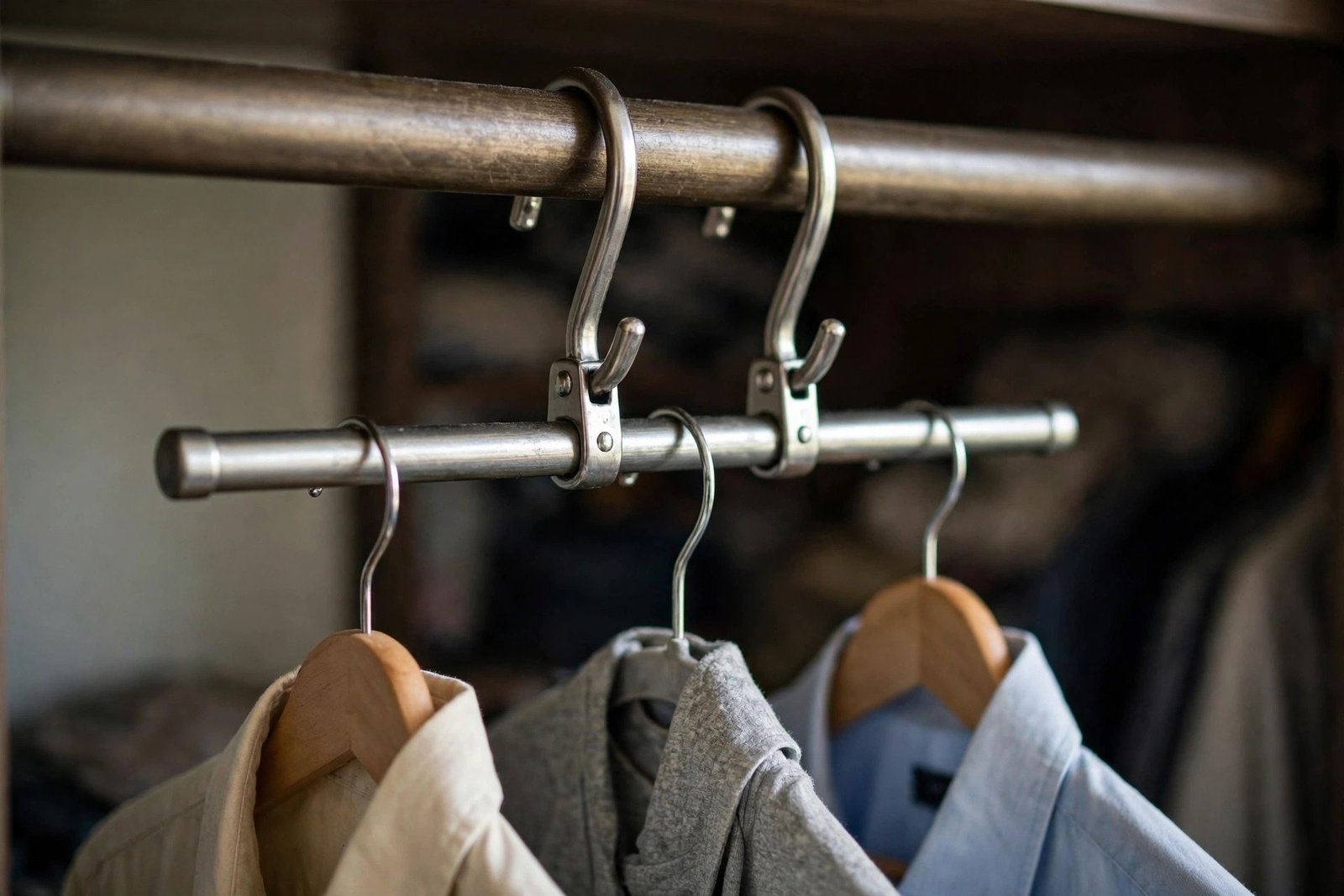
If your closet is the standard single-rod setup and you want the straightforward version, this is it: an alloy-steel bar listed at 30 inches wide and 35 high that hooks over your existing rod with two included hooks, no tools. Height adjusts, so you set the drop to your garments instead of accepting a fixed one. Reviewers rate the family 4.5 stars (laztos.com, November 2026).
The drawback is the ceiling: the listing’s maximum weight recommendation is 25 pounds — about ten shirts, not a coat collection. Our price read is an older listing crawl, so confirm live before you count on it.
Hook doubler, 2-pack: STORAGE MANIAC Hanging Closet Rod — best for two narrow sections
Two narrow closets, or one closet with a divider, want two small bars instead of one wide one: this 2-pack adjusts from 17 to 29 inches wide and 14.6 to 37.1 high, with six height settings. That deep height range is the kid-closet trick too — drop the lower bar to 30 inches or so and small hands reach their own clothes. Reviewers rate it 4.4 stars (laztos.com, November 2026).
The drawback is missing data: no weight capacity is published in the sources we found, and one buying guide warns it can feel wobbly if overloaded and is not for heavy coats. Treat it as light-to-medium duty — shirts and blouses, not winter wear.
Hook doubler: Honey-Can-Do Adjustable Hanging Closet Rod — best width and published capacity
For a wide section and a full row of shirts, this is the generous one: the horizontal bar provides up to 38 inches of additional space and holds up to 50 pounds per the maker, with notched vertical bars so you can level it. One guide puts the drop at about 22 inches below your rod — on a standard 66-inch rod that leaves the lower bar around 44 inches up, enough for shirts to clear the floor with room for shoes underneath.
The drawback is physics: all 50 of those pounds hang from your existing rod, so heavy coats stay on top and the doubler carries the light row. Assembly is required per the listing.
Fixed-width doubler: Organize It All Durable Chrome Closet Doubler — best when your section is exactly 30 inches
If your section measures 30 inches and you want height control without width fiddling, this chrome bar adjusts on eight rungs and is listed at 30 inches wide and 33.25 high, with a 25-pound maximum. Reviewers rate it 4.4 stars across 1,841 reviews (home.woot.com, November 2026).
The drawbacks are fit and availability. Width does not adjust — 30 inches is the deal — and one detailed review warns the top tier is too short for women’s shirts unless the bar hangs on the bottom rung, which is exactly the clearance math from the measure-first section. Our research found the listing currently unavailable with no featured offers, so confirm it is live before planning around it.
Two-bar doubler: Oceanstar 2-Tier Portable Adjustable Rod Closet Hanger — best light-duty span for a wide section
This one brings two expandable bars instead of one, each expanding from 20.5 to 36.5 inches in 2-inch increments, hung from two metal hooks on any standard rod. For a wide section of light clothes — tees, blouses, kids’ outfits — the span is the attraction.
The drawback is severe and worth stating plainly: the listing’s maximum recommended load is 10 pounds. That is a handful of light shirts, full stop. If your row is heavier, this is the wrong product, however good the span looks. We found no usable dated price read, so we quote no price; check the live listing.
Wide doubler, 2-pack: STARTOSTAR Upgraded Closet Hanging Rod, Long Version — best for wide sections and deeper drops
For a wide walk-in section, this stainless 2-pack expands from 29.5 to 39.5 inches wide with nine preset heights and a maker-rated load of up to 30 pounds. The long version is built for deeper drops — more room on the top tier before the second bar starts.
The drawbacks are minimum width and availability. At 29.5 inches minimum, narrow reach-ins need not apply — measure your section first. Our research found no featured offers on the listing, so whether it is buyable right now is genuinely uncertain, and we have no live price for it.
How we chose these: we do not buy and bench-test every product, and never claim we did. We shortlist on published dimensions and fit, state drawbacks, and re-check prices before publishing.
Rod-height fit table: what fits where
Read your measured rod height down the left column. Every doubler still needs its own checks — section width, garment length, load per tier.
Swipe sideways to see all columns →
| Your measured setup | What fits | Also check |
|---|---|---|
| Rod ~66 in, shirts ~40 in | Any hook doubler with drop set so lower tier clears the floor | Top tier gets only the drop — folded pants and shorts fit better than full shirts |
| Rod under ~60 in | Shallow-drop settings only; lower tier for short items | Long shirts on the lower tier will drag — measure hook to hem |
| Section width 17–29 in | STORAGE MANIAC (17–29 in, 2-pack) | No published capacity — light-to-medium loads only |
| Section width exactly ~30 in | Organize It All (fixed 30 in, 8 rungs) | Width does not adjust; availability uncertain at research time |
| Section width 29.5–39.5 in | STARTOSTAR Long Version (29.5–39.5 in) | Minimum width is 29.5 in — narrow sections excluded |
| Wide section, light clothes only | Oceanstar two-bar (20.5–36.5 in per bar) | 10 lb maximum — a few light shirts, nothing heavy |
| Heavy row, up to 50 lb on lower tier | Honey-Can-Do (up to 38 in, 50 lb per maker) | Your existing rod carries both tiers — coats stay on top |
| Kids’ closet, lower rod ~30 in | Deep-drop settings (STORAGE MANIAC to 37.1 in drop) | Adult clothes above must still clear the lower bar |
Two rules sit under the whole table. The 66-inch and 40-inch figures are sourced planning numbers, not a guarantee about your closet — your rod may sit lower, so measure yours, floor to rod. And if a doubler’s minimum width lands within an inch of your section width, choose the adjustable one — hooks and hanger swing eat the margin.
What to skip: screw-in second rods and coat-weight loads
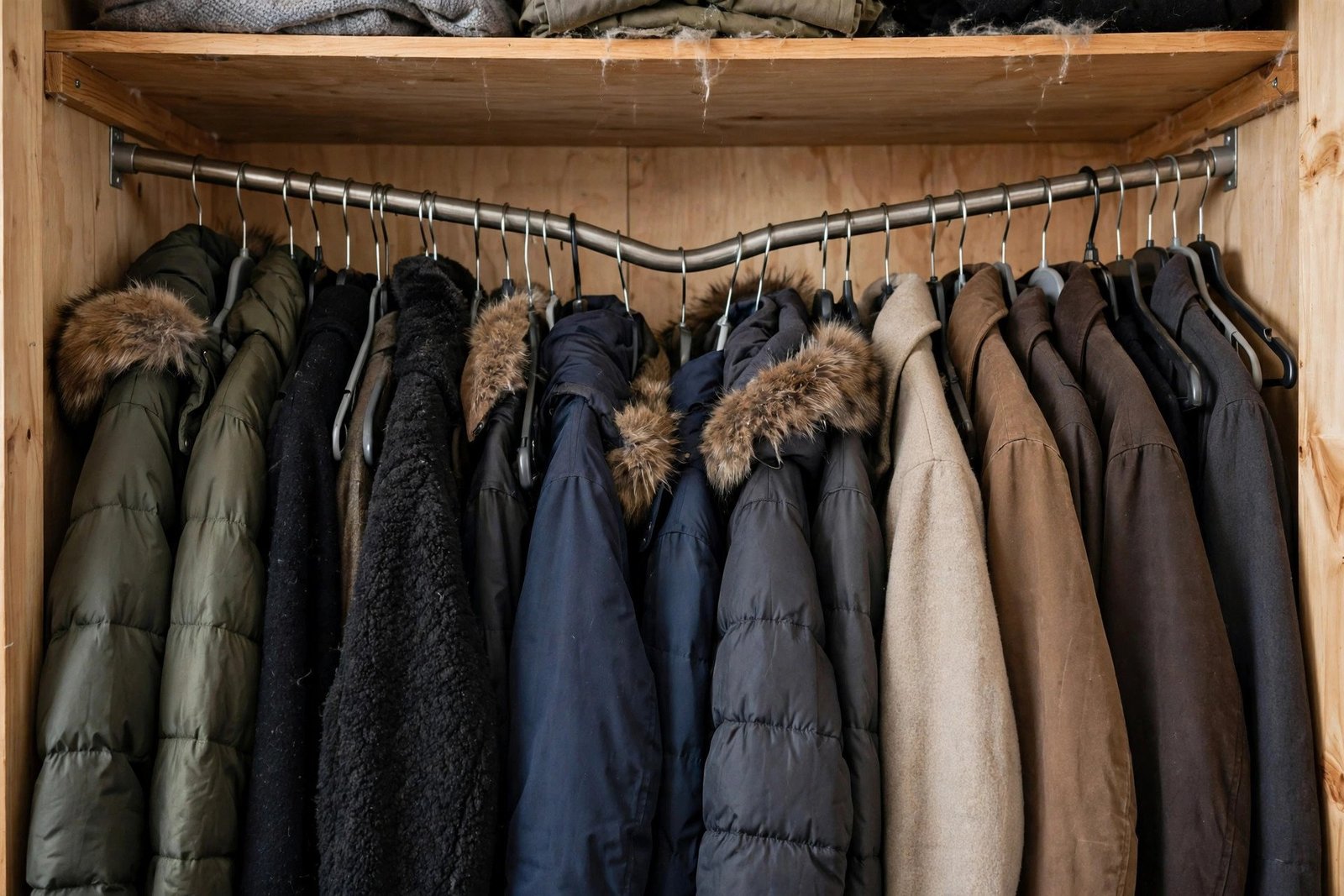
The owned-home catalog is built on work you cannot do as a renter: second rods screwed into closet side walls, built-in double-hang systems fixed to panels you do not own, and wall-track closet systems that need studs and a drill. Also skip the overload: a doubler rated at 10 or 25 pounds loaded with winter coats is a bent bar and a pile on the floor, and any doubler whose listing quietly requires wall brackets is not a renter product. Tension rods squeezed wall-to-wall are a different tool with their own slip risk — a hook-on doubler that never touches the wall is the renter-safe shape.
If a listing says “wall mount” or “screws included,” it is not a renter product, whatever the photos show.
Your five-minute measurement checklist
Write down five numbers. One: rod height — floor to the underside of the rod. Two: longest garment — hook to hem, on its hanger. Three: spare drop — rod height minus garment length minus floor clearance. Four: section width — the stretch of rod you want to double. Five: load — garments per tier at roughly 2 to 3 pounds per shirt. Then read the fit table: your rod height picks the drop, the other four numbers confirm the piece. A doubler whose lower tier drags, or whose rating your clothes exceed, does not belong in your closet.
Frequently asked questions
Does a closet rod doubler work in a rental closet?
Yes — hook-type doublers hang from your existing rod with no tools and no holes, and lift off when you move. The condition is clearance: both tiers must clear, so measure rod height and garment length first.
How much space do I need below my rod for a doubler?
Your rod height minus your longest garment minus a couple of inches. On a standard 66-inch rod with 40-inch shirts, roughly 24 inches is spare — the doubler’s drop and the lower tier share it.
Will a rod doubler hold heavy coats?
Only within its rating, and ratings here run from 10 to 50 pounds. Shirts run about 2 to 3 pounds each; coats 5 to 10. Keep heavy coats on the top rod — everything hangs from it anyway.
Can a doubler work for a child’s closet?
Yes — set the drop deep so the lower bar sits around 30 inches, the sourced child-rod height. Adult clothes above still need to clear it, so measure the top tier too.
Why do my shirts drag on the floor with a doubler installed?
The drop is too deep for your rod height, or the garments are longer than the space left. Raise the bar a notch, move long items to the top tier’s ends, or accept a single tier in that section.
What closet doublers should renters avoid?
Anything screwed into side walls or fixed to panels, plus any bar whose published capacity your clothes exceed. If it needs a drill, or the lower tier cannot clear the floor, skip it.